Reasons to Apply for Death Certificate Attestation: A Complete Guide
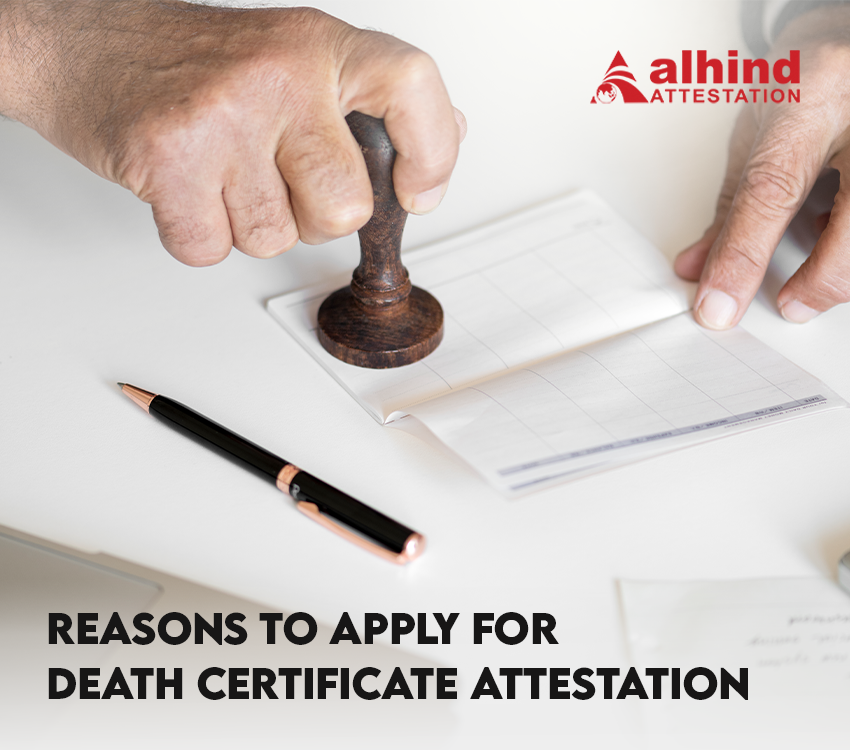
Reasons to Apply for Death Certificate Attestation: A Complete Guide
Understand the key Reasons to Apply for Death Certificate Attestation. Our guide covers everything you need to know for international legal and financial verification.
You must be having a lot of queries and doubts regarding this, let us walk you through everything you need to know about death certificate attestation, firstly we’ll address what this certificate does, why does it matter, and the key reasons why you might need to apply for one.
What Exactly Is a Death Certificate Attestation?
Before going directly into the reasons, we’ll try to understand the term attestation in layman’s terms.
Well, a death certificate is an official document which is issued by the government that records the passing of an individual. It contains essential information of the deceased person which includes the name of the deceased, date of birth, date of death, place of death, and cause of death, among other details.
Now, when this certificate issued by your home country needs to be used in a foreign country for legal, financial, or administrative purposes. The foreign country's authorities need assurance that the document is genuine and has been issued by a legitimate authority. They will not and cannot simply take the document at face value. This is where process of attestation comes in.
Attestation is essentially a legal verification process in which designated officials typically the State Home Department, the Ministry of External Affairs (MEA), and the concerned foreign embassy examine the certificate, confirm its authenticity, and place an official stamp or seal on it. Once attested, the death certificate becomes legally valid and internationally recognized.
In short, attestation is the bridge between a document issued in India and its acceptance abroad.
Who Can Apply for Death Certificate Attestation?
Whether you are the deceased's spouse, child, sibling, or even a close relative, you have the right to apply for a death certificate attestation. Legal representatives and estate lawyers can also initiate the process on behalf of the family. The process is open to anyone who has a legitimate reason to use the death certificate in a foreign country.
Documents Required for Death Certificate Attestation
The documentation process is fairly straightforward, don’t over complicate. You will generally need the following:
- A copy of the applicant's passport
- The original death certificate issued by the registrar, and in some cases, supporting documents such as a cremation receipt, hospital letter, or affidavit confirming the date and time of death.
To be safe, always check with your attestation service provider or the concerned embassy for any additional requirements, as these can vary depending on the destination country.
The Key Reasons to Apply for Death Certificate Attestation
Now let’s understand the crux of this certificate. Why would a family actually need to go through this heart-wrenching process? The reasons are not as complex as most people think.
Claiming Insurance Benefits Abroad
One of the most common reasons families apply for death certificate attestation is to claim life insurance. If the deceased held a life insurance policy with a company operating in a foreign country, or if the policy was taken out during a period of residence abroad, the insurance company will demand an attested death certificate before processing the claim.
This certificate serves as the official and legal confirmation of death for the insurer. Without it, the claim simply cannot move forward. Life insurance is usually taken out to protect the family from unexpected emergencies, it would be deeply unfortunate to let those benefits go unclaimed simply due to missing paperwork. Getting the death certificate attested ensures that the family receives what they are rightfully entitled to.
Settling Property and Real Estate Matters
Transfer of property (belonging to the deceased) to legal heirs, be it a house, land, or commercial real estate in a foreign country becomes a complex affair. Verification of death is mandatory for foreign land authorities and property registrars to process a title transfer.
And yet again attested death certificate comes in handy here. It gives foreign authorities confirmation when the original owner of the property has passed away, allowing the legal transfer of ownership to proceed smoothly. Without it, the property could remain in legal limbo for years, causing significant financial and emotional stress for the surviving family.
Accessing and Closing Bank Accounts
A person settled abroad is bound to maintain bank accounts in those countries. In the event of their death, their family members need to access those accounts to claim the balance and close them formally. Many people who work or live abroad maintain bank accounts in those countries. Banks in these foreign countries operate under strict legal obligation and therefore proper documentation is a must for them to release funds to anyone.
One of the primary documents that these banks will ask for in such situations is an attested death certificate. The certificate gives these foreign banks a legal assurance that they need to transfer the deceased’s funds to the rightful dependents. If you fail to provide this certificate, accounts will remain frozen and inaccessible for an indefinite period.
Receiving Pension and Retirement Benefits
In cases where the deceased was a retired professional who received a pension from a foreign employer or government body, the surviving spouse or dependents may be entitled to continue receiving a portion of that pension. Here again for the pension authority to make changes to the payment structure, they’ll will need formal proof of the account holder's death.
An attested death certificate fulfills this requirement. It helps in starting the formal process of transferring pension benefits to the surviving family members, ensuring they are not left without this crucial financial support during such difficult times.
Filing the Final Tax Returns of the Deceased
Handling the tax affairs of someone who has passed away is a responsibility that often falls on the family, an estate lawyer, or a financial accountant. If the deceased had taxable income or financial interests in a foreign country, the relevant tax authorities will need to be formally notified of the death.
An attested death certificate is the document that triggers the closure of the deceased's tax obligations in that country. It confirms that no further tax returns are expected from the individual and allows the family to settle any outstanding obligations cleanly and legally.
Transporting Human Remains Internationally
When someone passes away in abroad and the family wishes to bring the body back to the home country for last rites, there are strict international rules in place for the transportation of human remains. This is a reason that many families may not think about until they are in the deeply emotional situation of needing to repatriate a loved one's remains.
Again, attested death certificate becomes a must for obtaining the necessary transit permits and clearances. This documentation is required by airlines, port authorities, and foreign embassies and only then will they permit the movement of remains across international borders. Having the certificate attested in advance can save families from heartbreaking delays during an already painful time.
Legal Proceedings and Inheritance Claims
Inheritance disputes and estate settlements can be quite complicated because international jurisdictions are also involved. And so, documents which are not properly authenticated according to the international standards will not be taken into consideration by foreign courts and legal systems.
An attested death certificate makes it easier for the family to pursue inheritance claims, challenge unfair distributions, and it helps to make sure that final wishes of your loved one is carried out. Without it, legal proceedings can be delayed or even dismissed on procedural grounds.
Immigration and Family Reunification
In cases where the visa or residency status for other family members living abroad depends on the family member who has passed away, surviving spouses or dependents will have to apply for a change in their immigration status. Documented proof of the person who passes away is required by the foreign immigration authorities.
That’s where an attested death certificate comes into play as it provides exactly that proof, allowing families to navigate their immigration circumstances with the proper documentation in place.
The Attestation Process: A Brief Overview
In order to prevent the families from being taken by surprise at that moment, having an idea about how attestation works can help families prepare for this process in advance and avoid unnecessary delays.
Let’s break down the process in steps for better understanding:
- Firstly, the certificate is verified by a local notary.
- The second step is the certificate getting authenticated by the State Home Department (since a death certificate is a personal document).
- Finally, attestation from the Ministry of External Affairs (MEA), and finally stamped by the embassy of the destination country.
Each stage adds a layer of official verification, building toward a document that is fully recognized and accepted internationally.
Why Choose a Professional Attestation Service?
This is a very common question as many of you might be thinking – “why can’t I do it on my own?”. The attestation process involves running in and out of many government departments, it can be quite time-consuming and annoying for a person who is grieving. This is the reason why many families choose to work with a professional certificate attestation service.
It becomes so much easier when you have the guidance of a reliable service provider who knows A to Z about death certificate attestation. At Alhind, we handle the entire process from document pickup to final delivery prioritizing your peace of mind during what is already a very difficult time. Alhind is certified by MEA, has a strong track record, offers transparent pricing and provides responsive customer support. Accuracy and speed being our forte.
Final Thoughts
I know it might be very difficult for you to go through this process while mourning for a loved one. But you need to understand that it is a practical process which protects families and that it is not a mere bureaucratic formality.
It makes sure that financial benefits are received by the family, properties transferred without any conflict and legal matters are clearly resolved.
It is a general practice to delay this process, but things only get worse when you delay this process. The sooner the attestation is completed, the sooner your family can focus on healing rather than being entangled in unresolved legal and financial matters abroad. Reach out to Alhind Attestation Services, and let the experts guide you smoothly through this.
Recent Blogs
Reasons to Apply for Death Certificate Attestation: A Complete Guide
11-Apr-2026
Why is Commercial Document Attestation Required?
05-Mar-2026
How to Get Your Police Clearance Certificate Attestation: The Complete 2026 Guide
10-Feb-2026
Why Must I Get My Education Certificate Attested To Work Or Study Abroad?
01-Jan-2026